
Tuesday, 10/20/2026
Depending on the school they go to, they may also be exposed\r\nto more creative activities such as art and music. These skills, while useful,\r\naren’t what we would call hard life skills. In fact, most of them aren’t very\r\nuseful once we enter the ‘real world.’ This is particularly relevant given that\r\nthe world is changing so rapidly.
\r\n\r\n\r\n\r\nBut there is one skill that we could teach our children that\r\nwould help them in all areas of their lives.
\r\n\r\n\r\n\r\nIt would help them develop more emotional intelligence,\r\ncognitive acuity, compassion, and confidence.
\r\n\r\n\r\n\r\nThis skill would strengthen their immune systems, increase\r\ntheir willpower and improve their ability to make difficult decisions under\r\npressure. All in all, it would make them happier individuals and allow them to\r\nbetter deal with the stresses of technology and modern life.
\r\n\r\n\r\n\r\nSo what is it?
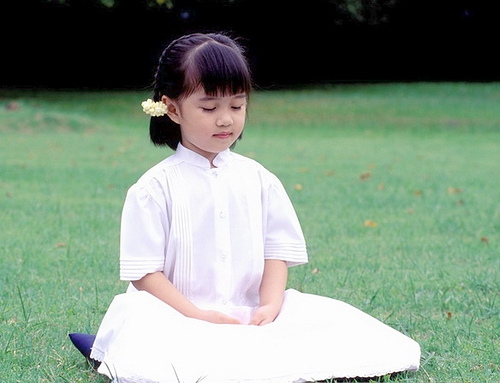
\r\n\r\n\r\n\r\nMeditation.
\r\n\r\n\r\n\r\nMeditation is the antidote to the aspects of modernity that\r\nhave become pathological.
\r\n\r\n\r\n\r\nThis pathology is manifesting itself as an inability to look\r\nat ourselves openly and honestly. We are conditioned to look for distractions\r\nin the form of social media, movies, Netflix, and junk food.
\r\n\r\n\r\n\r\nAs human beings, it is natural that we should fall into the\r\ntrap of listening to our ego, but what modern society unfortunately does is\r\namplify that voice. We’re seeing a few ways in which children are being\r\nimpacted by this change. But meditation can help us solve alleviate these\r\nissues whilst at the same time allowing us to develop some of our greatest\r\nhuman strengths.
\r\n\r\n\r\n\r\nHere are 5 reasons we need to introduce meditation to\r\nschools:
\r\n\r\n\r\n\r\n1. It can help reduce symptoms of ADHD (ATTENTION DEFICIT /\r\nHYPERACTIVE DISORDER) and Autism
\r\n\r\n\r\n\r\nThe causes of Autism are highly contested. However, the one\r\nthing that is clear is that autism is a stress response. Meditation can\r\nincrease children’s resilience to stress and offer relief when it comes to the\r\nsymptoms of autism.
\r\n\r\n\r\n\r\nWith regards to ADHD, diagnoses have skyrocketed in recent\r\nyears and it serves everyone involved to look for a solution that doesn’t\r\ninvolve prescription medication. A number of studies, including on out of the\r\nUniversity of California Los Angeles (UCLA), found that only 8 weeks of\r\nmindfulness meditation training was incredibly beneficial to both adolescents\r\nand adults suffering from ADHD.
\r\n\r\n\r\n\r\nImagine how much 8 years could help!
\r\n\r\n\r\n\r\nFor those that don’t suffer from ADHD, meditation is also\r\nhugely beneficial to general concentration.
\r\n\r\n\r\n\r\n2. It can combat Depression and Anxiety
\r\n\r\n\r\n\r\nThere are dozens, if not hundreds of studies demonstrating\r\nthe benefits of meditation on depression and anxiety. Goyal & Singh et al.\r\nfor example, studied the effects of mindfulness meditation on 3515\r\nparticipants, adding to the increasing body of evidence that it can decrease\r\ndepression and anxiety.
\r\n\r\n\r\n\r\n\r\n\r\n\r\n\r\n\r\n\r\nThis is a particular problem amongst young people these days\r\nwho have to deal with novel issues such as cyber-bullying and body image issues\r\nrelated to social media exposure.
\r\n\r\n\r\n\r\n3. It improves creativity
\r\n\r\n\r\n\r\nSchools and educational programs have been widely accused of\r\ndiminishing creativity, so any effort to stimulate it would be beneficial. One\r\nstudy that looked at 5 measures of creativity saw a significant increase in those\r\nthat meditated over a 6-month period.
\r\n\r\n\r\n\r\n4. It improves emotional intelligence and compassion
\r\n\r\n\r\n\r\nWe now know that both emotional intelligence and compassion\r\naren’t inherent traits, they’re skills that need to be developed and nurtured\r\nover time. Studies have shown that meditation can play a fundamental role in\r\nthis process, improving our emotional intelligence and expanding our capacity\r\nfor compassion.
\r\n\r\n\r\n\r\n5. It improves learning
\r\n\r\n\r\n\r\nThis probably seems like the most obvious benefit for\r\nschools to consider. A study at George Mason University looked at students who\r\nattended a lecture after meditating and found that even with a short meditation\r\nthey were able to retain the information better. Meditation also serves as an\r\naccurate predictor of who will pass and fail. If meditation became part of the\r\nschool curriculum it could have deep benefits not just for our children but for\r\nthe future of our planet.
\r\n\r\n\r\n\r\nSome of the most profound benefits of the practice only come\r\nafter a very long-term practice of 20 or more years. Some studies have found\r\nsuper fast cognitive functioning, the ability to repress the startle response,\r\nthe slowing down of neurodegenerative diseases.