
Friday, 10/09/2026
In 2018, during the change of seasons when the climate shifted abruptly, many at Hoang Phap Temple fell ill with what is called “viral fever.” I, along with several monks and lay volunteers, was admitted to Go Vap District Hospital, about fifteen kilometers away. At that time, I had not yet taken full ordination. I was still a lay practitioner serving at the temple as a volunteer guard, a role few knew was also a form of meritorious service, no different from other temple duties. Another guard, though not sick, came with me to the hospital to care for my meals and movements.
After a few days in the ward, some brothers and sisters from the guard team began to ride their motorbikes from the temple to visit me. Including the two supervising monks who led them, there were more than ten people. They asked with warm concern about my health. Some came in gray robes, some in brown, and some in ordinary clothes. Most of these guards were young adults, deeply devoted to supporting the Sangha and enthusiastic in their practice. Some lived at the temple regularly; others arranged their time to come on weekends. Some were from the North, others from the Central region, and still others from the South.
There is a Buddhist verse that says:
"Each comes from a different land and river, yet upon entering the Buddhist temple’s gate, all are children of one family."
Indeed, Hoang Phap was not only a temple but also a home. We had the good fortune to meet there, to live together, to practice together, to rely on each other, and to contribute our youthful energy to help the monks organize retreats for people from near and far. It was a precious bond, not easily found in a society so full of competition and struggle.
After sitting with me for quite a while, I led them on a walk around the hospital. Go Vap Hospital is not far from Tan Son Nhat Airport. From the fifth floor, where I was being treated, one could see airplanes parked and taking turns to depart. To be honest, although I was ill, because I kept a cheerful spirit and exercised regularly, the fever was mild and I felt well enough to take my friends out for a walk. We even climbed up to the rooftop to look at the city of Saigon. In replace to this, the two supervising monks went to visit the other monks and lay practitioners who were in different rooms, so they did not join us. After that, the hospital visit ended. I saw them off with joy yet also with a lingering feeling of attachment.
When I returned to my ward, passing the row of chairs outside, a woman of about 50 called me over. I had noticed her before, sitting there with some relatives. She wore a light pink jacket and looked rather thin. She was caring for her nephew, who was also suffering from viral fever in a nearby room. With a curious look, she asked me:
– “What is your relationship with those young people who just came?”
I answered sincerely:
– “They are volunteer guards from Hoang Phap Temple who came to visit me. Though they work as guards, it is only in the spirit of "helping the temple.”
I then told her about the retreats held at the temple, such as retreats for students and for children.
When I finished, she gazed toward the hospital gate, her wrinkled eyes thoughtful, and said slowly as if to emphasize something:
– “When they came in, I kept wondering who they were. They looked so different from ordinary young people, polite and gentle in their manner. I do not know what they are taught at the temple, but they seemed joyful, calm, and graceful. I am Catholic, but this is the first time I have felt such a sense of holiness and kindness from Buddhist youth. They were truly different from other young people I have seen outside.”
Hearing her speak like that moved me deeply. Perhaps because I had lived in the temple for a long time, such things had become normal to me. To walk, to speak, to act respectfully is simply natural for practitioners. But for this woman, witnessing it for the first time, her emotions were fresh and keen. She saw something beautiful and endearing in those volunteer guards.
She then spoke of her nephew with a sigh:
– “I wish my nephew could be like those young people. He is already over twenty but cannot take care of himself. He only follows his friends in idleness and indulgence. His parents are busy working, but their home life is not happy either.”
She expressed her wish to bring her nephew to the temple so that he might learn and grow. I promised to help, and also explained how she could guide him toward the temple.
We sat talking for quite a long time in the crowded hospital corridor. The simple visit from my fellow volunteers had left a deep impression on this woman, and also on me. Even though almost four years have passed, and temple work has kept me busy, I still remember the story vividly. It made me cherish the people around me even more. It also filled me with pride and gratitude that endures to this day.
That moment has become a beautiful memory for me, carrying a profound meaning about human kindness. It showed me the image of Buddhist practitioners living among the people, bringing peace into the world. This beauty was not about outward appearance or ego, but the fruit of hearts oriented toward goodness and the Dharma. It was the manifestation of faith in the Buddha, the Dharma, and the Sangha. It was the expression of hearts that live with love and service, in simplicity and sincerity. The musician Trinh Cong Son once wrote a line of song: “Be innocent, and you will find the dawn.”He wished to remind everyone to live innocently and truthfully, so that happiness and peace will naturally blossom.
Our master, the abbot of Hoang Phap Temple, often teaches the community:
“See the work of others as your own. Do it with sincerity and wholeheartedness. Then you will be loved and trusted wherever you go.”
He also says:
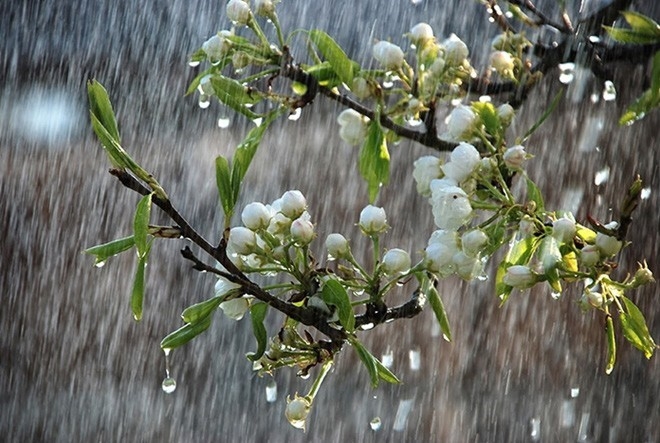
“Live like a flower. Life is short, yet a flower still spreads fragrance and brings beauty to this world.”
Indeed, life around us is full of beauty and meaning. If we pause and quiet our hearts, we can perceive it deeply. At the same time, we should not try to possess or cling to anything, for that is attachment, which only brings suffering between ourselves and others. That is not true compassion as the Buddha taught. We simply observe and appreciate the wondrous presence of what surrounds us. The great master Śāntideva once wrote:
“When desire arises in the mind,
When anger begins to stir,
Pause your words and actions,
Be still like a tree.”
Tâm Thi
Translated into English by Nguyen Thi Mai Thao