
Tuesday, 10/20/2026
Little is known about the causes of biliary tract\r\nand gallbladder tumors, but emerging evidence suggests obesity as well as\r\nelevated blood sugar levels that are a hallmark of diabetes may increase the\r\nrisk of these malignancies.
\r\n\r\n\r\n\r\n
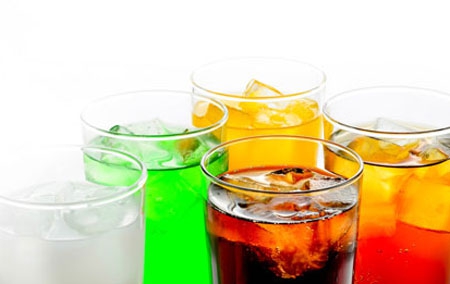
Because sodas and other sugary drinks have been\r\nlinked to high blood sugar and weight gain, researchers wondered if these\r\nbeverages might play a role in these types of cancer, said lead study author\r\nSusanna Larsson of the Karolinska Institute in Sweden.
\r\n\r\n\r\n\r\n
To explore this possibility, researchers analyzed\r\nsurvey data on the eating and drinking habits of more than 70,000 adults then\r\nfollowed them for more than 13 years on average to see whether cancers got\r\ndiagnosed.
\r\n\r\n\r\n\r\n
Only about 150 people developed biliary tract or\r\ngallbladder cancers during the study period.
\r\n\r\n\r\n\r\n
But compared with people who avoided sugar-sweetened\r\ndrinks altogether, individuals who consumed two or more juice drinks or sodas,\r\nincluding artificially sweetened sodas, a day had more than twice the risk of\r\ndeveloping gallbladder tumors and 79 percent higher odds of getting biliary\r\ntract cancer, the study found.
\r\n\r\n\r\n\r\n
“Soda consumption has been inconsistently associated\r\nwith risk of biliary tract cancer (only one prior study) and other cancers in\r\nprevious similar studies,†Larsson said by email.
\r\n\r\n\r\n\r\n
The current study “is the first study to show a\r\nstrong link between consumption of sweetened beverages, such as soda, and risk\r\nof biliary tract cancer,†Larsson added.
\r\n\r\n\r\n\r\n
At the start of the study, participants completed\r\nfood and drink questionnaires that asked how many sodas or juice drinks they\r\nhad consumed in the past week and how much they typically consumed during the\r\nprevious year.
\r\n\r\n\r\n\r\n
When they answered these questions in 1997,\r\nparticipants were 61 years old on average. About half of them were overweight\r\nand roughly 25 percent were current smokers.
\r\n\r\n\r\n\r\n
Researchers excluded people with a previous cancer\r\ndiagnosis or a history of diabetes.
\r\n\r\n\r\n\r\n
The people who drank two or more sodas or sugary\r\nbeverages a day were more likely to be overweight and eat a higher-calorie diet\r\nwith more sugar and carbohydrates and less protein and fat.
\r\n\r\n\r\n\r\n
The increased risk of gallbladder and biliary tract\r\ntumors persisted, however, even after researchers adjusted for whether\r\nparticipants were overweight.
\r\n\r\n\r\n\r\n
Because the study is observational, the findings\r\ndon’t prove soda and sugary drinks cause cancer.
\r\n\r\n\r\n\r\n
It’s also possible that because researchers only had\r\ndata on drinking habits at the start of the study, the findings might have been\r\ninfluenced by changes over time in the beverages people consumed, the authors\r\nnote in JNCI: Journal of the National Cancer Institute.
\r\n\r\n\r\n\r\n
\r\n\r\n
\r\n\r\n
\r\n\r\n
Researchers also lacked precise data to assess how\r\noften the sugary drinks people chose were diet sodas, said Dr. Margo Denke, a\r\nformer researcher at the University of Texas Southwestern Medical School in\r\nDallas who wasn’t involved in the study.
\r\n\r\n\r\n\r\n
\r\n\r\n
Even so, “this study suggests that there is more\r\nthan a plausible link; the incidence of biliary and gall bladder cancer was\r\nhigher among individuals who consumed more sodas and juices,†Denke said by\r\nemail.
\r\n\r\n\r\n\r\n
The exact reasons for the connection between sodas\r\nand these tumors may be unclear, but the message for consumers is still simple,\r\nsaid Dr. Igor Astsaturov, a medical oncologist at Fox Chase Cancer Center in\r\nPhiladelphia who wasn’t involved in the study.
\r\n\r\n\r\n\r\n
“Obviously, this finding signals again and again\r\nthat healthy lifestyle is the key to cancer-free life,†Astsaturov said by\r\nemail. “Regardless of the cause, it is easy enough to quench the thirst with\r\nwater to stay fit and healthy.â€
SOURCE: bit.ly/29ISzJV (JNCI: Journal of the\r\nNational Cancer Institute, online June 8, 2016)
Lisa Rapaport